Tactical analysis · Bayer Leverkusen
How Alonso’s Leverkusen used wing-backs without losing control
Width was the visible feature. The supporting structure made it possible.
The problem
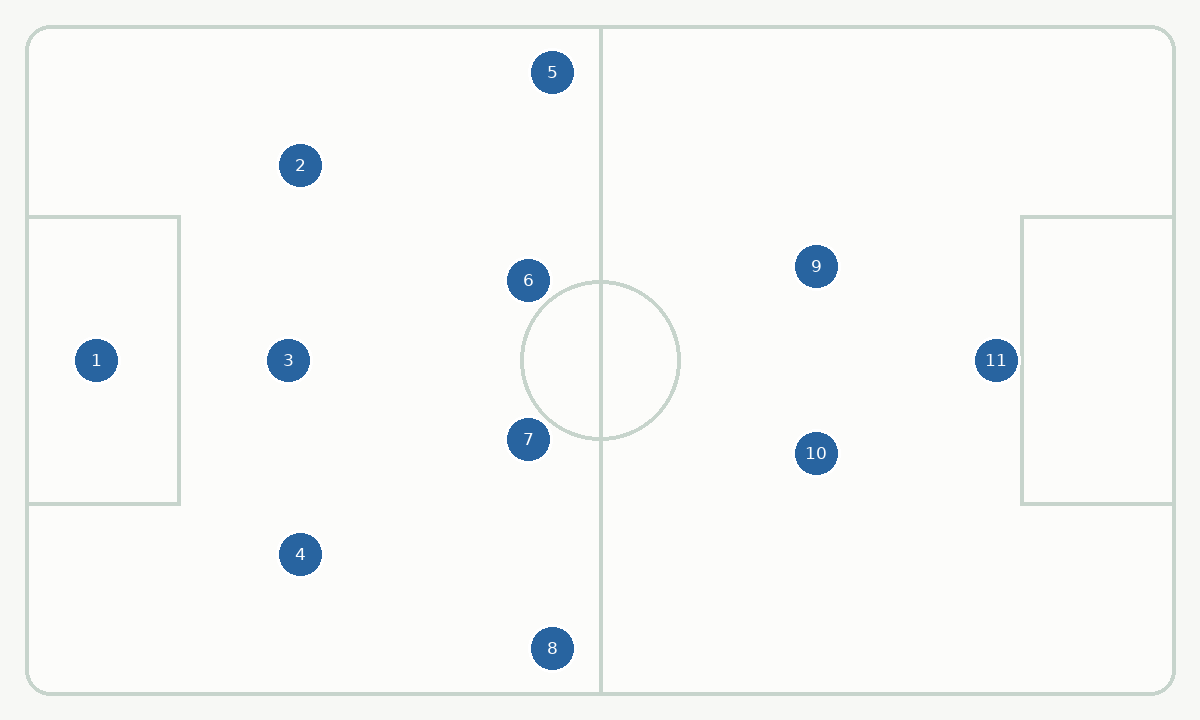
Leverkusen’s wing-backs could hold high positions because the back three and central midfielders provided a platform behind them. That created a difficult choice for the opposition full-back: step out towards the wing-back and open the inside channel, or stay narrow and concede space outside.
What the board shows
Build a 3-4-2-1 on the board. Push the wing-backs towards the touchlines, then place two attacking midfielders between the opponent’s midfield and defensive lines. The two central midfielders must stay available for recycling possession and protecting the middle on turnovers.
What could go wrong
The trade-off comes when the ball is lost on the wing. The nearest centre-back may need to cover a large space, so the far-side wing-back cannot always remain as high as the ball-side player.