Tactical analysis · Barcelona
The false nine explained through Messi’s Barcelona
The space behind a striker can matter more than the striker’s starting position.
The problem
In a conventional front three, the central forward occupies the centre-backs. A false nine changes that reference point. When Messi dropped towards midfield, a defender had to decide whether to follow him and open a channel, or hold the line and allow Messi to receive facing goal. Neither choice was comfortable.
What the board shows
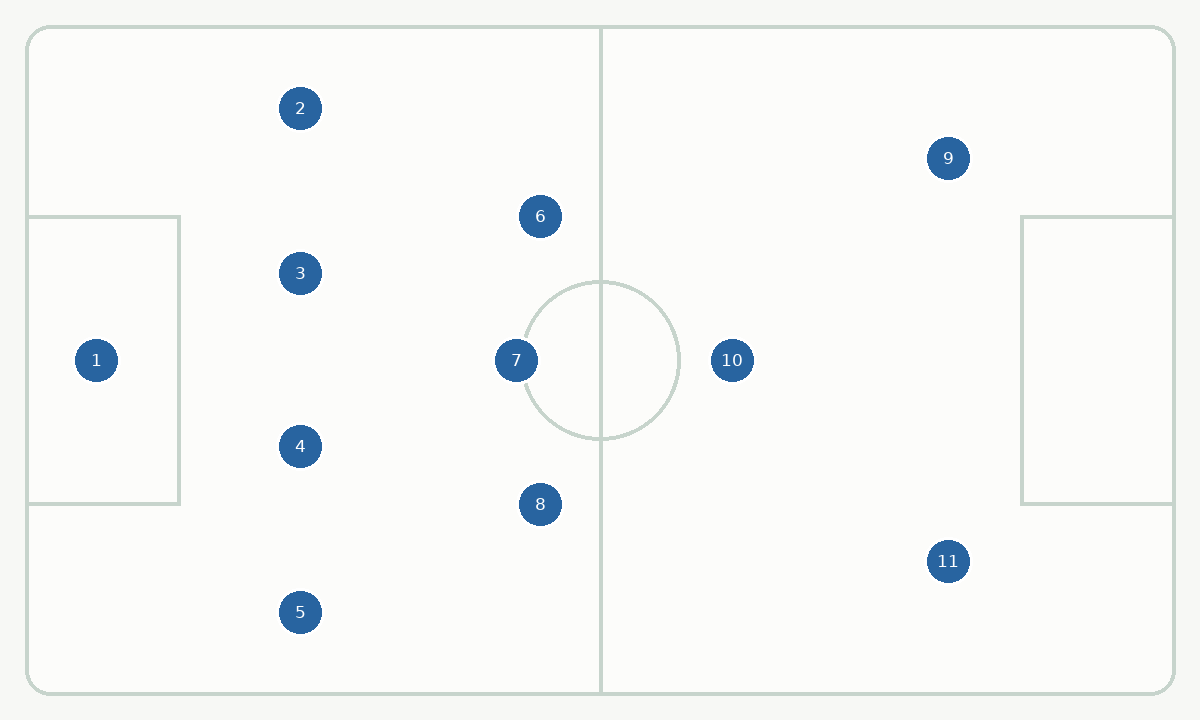
Place the centre-forward a little deeper than the two wingers. The wide forwards then make diagonal runs behind the defence while the midfield triangle gives the false nine short passing options. The full-backs can hold the width when the wingers attack inside.
What could go wrong
This is not a universal solution. If the midfield cannot find the dropping forward, the team simply loses depth. The movement works when the timing of the runs is coordinated with the pass into feet.